
Alexandr Wang is one of the most pivotal figures in the artificial intelligence landscape. At just 28 years old, he has become a symbol of AI’s disruptive potential and a driving force in the race for technological dominance. Here’s how Wang fits into the narrative of the most wanted and most dangerous minds shaping AI today.
Who is Alexandr Wang?
-
Founder & Former CEO of Scale AI: A company focused on providing labeled data to train and optimize AI systems. Scale AI powers projects for tech giants like Meta, OpenAI, and Microsoft, as well as governments, including the U.S. Department of Defense.
-
Background: Raised in Los Alamos, New Mexico, the child of physicists, Wang’s early exposure to STEM shaped his trajectory. He briefly attended MIT before dropping out to join Y Combinator and launch Scale AI in 2016.
Why He’s Wanted
-
AI Infrastructure Leader:
Scale AI’s tools are integral to training foundational AI models, from self-driving cars to advanced large language models. This has positioned Wang as a cornerstone of the AI ecosystem. -
Young Billionaire:
Wang became the youngest self-made billionaire in 2021, highlighting his meteoric rise and appeal to investors eager to bet on AI’s future. -
Collaborator with Industry Giants:
His company’s recent partnership with Meta, in which Scale received a massive $14.3 billion investment, demonstrates Wang’s centrality in AI innovation and scaling.
Why He’s Dangerous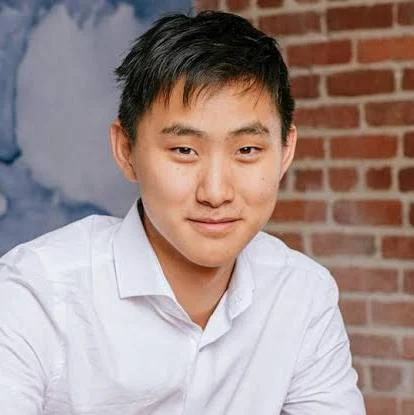
-
Ethical Concerns in AI Data Labeling:
Scale AI’s reliance on low-cost data labeling has been criticized as exploiting workers in developing countries, with some dubbing it “digital sweatshops.” -
Weaponization of AI:
By working with government agencies like the Pentagon, Scale AI has faced accusations of militarizing AI and contributing to surveillance capabilities. -
Concentration of Power:
As AI increasingly shapes global economies and security, Wang’s ability to influence key infrastructure raises questions about accountability and governance.
Meta’s Superintelligence Play
In June 2025, Wang took on a new role with Meta, leading its “superintelligence” research lab after a multibillion-dollar investment in Scale AI. This development has made him even more influential, as Meta pushes the boundaries of AI development.
Legacy and Impact
Alexandr Wang’s journey from MIT dropout to one of the most important players in AI exemplifies both the promise and peril of this transformative technology. His vision for Scale AI and now Meta’s superintelligence lab positions him as a driving force in shaping the future of artificial intelligence—for better or worse.
Let me know if you’d like further refinements or details!
One Man, Many Men: Ten of AI’s Most Wanted & Most Dangerous People on the Planet Today
Artificial Intelligence (AI) has been described as both a blessing and a curse. Behind its meteoric rise are individuals who wield immense power and influence, shaping the trajectory of this transformative technology. These figures are celebrated as visionaries by some and feared as harbingers of potential catastrophe by others. Here’s a rundown of ten of the most wanted and most dangerous people in AI today, based on their impact and the controversies surrounding them.
1. Sam Altman
Role: CEO, OpenAI
Why He’s Wanted: Altman steers OpenAI, the creators of ChatGPT and GPT-4, which have revolutionized human-computer interactions.
Why He’s Dangerous: Critics argue his push for ever-larger AI models risks unforeseen societal consequences, from misinformation to job displacement.
2. Demis Hassabis
Role: Co-founder & CEO, DeepMind
Why He’s Wanted: Hassabis’ DeepMind, a subsidiary of Google, has achieved breakthroughs in AI, including AlphaGo and AlphaFold, reshaping fields like healthcare and gaming.
Why He’s Dangerous: There’s concern over DeepMind’s close ties to a tech giant and the concentration of its power in private hands.
3. Elon Musk
Role: Founder, xAI (and multiple other ventures)
Why He’s Wanted: Musk has long sounded alarms about AI’s risks while funding projects like Neuralink and OpenAI. His latest venture, xAI, promises to build AI “aligned with humanity.”
Why He’s Dangerous: Skeptics argue Musk’s rhetoric sometimes stokes fear unnecessarily, while his companies operate at the frontier of ethically ambiguous technologies.
4. Andrew Ng
Role: Co-founder, Coursera and DeepLearning.AI
Why He’s Wanted: Ng is an educator and advocate for democratizing AI through accessible learning resources.
Why He’s Dangerous: Critics say his focus on AI’s potential can sometimes downplay its ethical concerns.
5. Fei-Fei Li
Role: Co-director, Stanford Institute for Human-Centered AI
Why She’s Wanted: A pioneer in computer vision and ethics in AI, Li emphasizes inclusivity and responsible development.
Why She’s Dangerous: Her work in partnership with tech giants like Google has led to debates about the militarization and surveillance capabilities of AI.
6. Yoshua Bengio
Role: AI Researcher, “Godfather of Deep Learning”
Why He’s Wanted: Bengio has been instrumental in the theoretical foundations of modern AI.
Why He’s Dangerous: His advocacy for global AI regulation highlights fears that unchecked AI could spiral out of control.
7. Mark Zuckerberg
Role: CEO, Meta
Why He’s Wanted: With initiatives like Meta’s AI lab and AI-driven products, Zuckerberg is doubling down on his vision for an AI-infused metaverse.
Why He’s Dangerous: Critics worry about his company’s track record on privacy and the ethical dilemmas of embedding AI into social platforms.
8. Cade Metz
Role: Tech Journalist, AI Historian
Why He’s Wanted: Metz chronicles the rise of AI, influencing public opinion and discourse on its implications.
Why He’s Dangerous: Misinformation or overly speculative reporting could either overhype or demonize AI unnecessarily.
9. Geoffrey Hinton
Role: AI Pioneer
Why He’s Wanted: Known as another “Godfather of AI,” Hinton’s work laid the foundation for deep learning.
Why He’s Dangerous: Recently, Hinton quit Google to warn about the existential risks AI could pose, adding urgency to the AI safety debate.
10. Shanahan Liu
Role: Rising Star in AI Hardware Development
Why He’s Wanted: Liu has pioneered new hardware architectures making AI models faster and more efficient.
Why He’s Dangerous: Accusations of militarizing AI hardware for authoritarian governments have raised ethical alarms.
The Legacy of Their Actions
While these figures are shaping the present and future of AI, their influence raises fundamental questions: Who decides what “good” AI looks like? How do we ensure the technology aligns with humanity’s best interests? In a field that straddles progress and peril, the world watches as their choices define the course of history.